Wednesday, May 28, 2014

Upfront Article Essay : Designer Babies By Isobel Weiner 813

The article, “Designer Babies” by Patricia Smith, featured in the May 12th volume of  ‘Upfront’ magazine, discusses how through advancements in scientific understanding, parents may soon be allowed to create a ‘perfect’ baby.

There are many differing opinions concerning this possibility. Some people are voicing ethical questions about whether we should interfere with the way humans reproduce, while others think that being able to select traits such as “tall” and “athletic” is a beneficial development. Scientists agree with the progress being made towards genetic advancements, as diseases such as sickle cell anemia, hemophilia, and cystic fibrosis could be replaced with healthy genes. Dr. Alan Copperman, director of reproductive endocrinology and infertility at Mount Sinai Medical Center in New York City states, “the most exciting part, scientifically, is to be able to prevent or fix an error in the genetic machinery.” Morally, I believe that a procedure to alter genes is wrong, and that people shouldn’t be allowed to assemble the ‘perfect child’.

The reasoning behind my belief is that by changing the DNA of your child, you are completely altering who they would have become if they had been reproduced the human way. If everyone began creating “designer babies” there would be no individuality or diversity. Parents would choose the best traits for their child, therefore making them just another ‘perfect’ human. The uniqueness of each individual human would be lost. Additionally, there are health risks involved. If scientists wrongly alter an individual’s genes, the defect becomes inheritable. Other people agree with my opinion. Among them is Jeremy Gruber, president of the Council for Responsible Genetics, who fears these procedures could cause genetic abnormalities or remove positive traits accidentally.

Some people think that by creating designer babies and eliminating genetic diseases, scientists are benefitting the human population. Among these people are researchers at BGI in China, who are attempting to test human embryos for IQ so parents can chose the ones with the highest IQ. However, these people are still allowing specific traits to be chosen, and therefore allowing the individuality of each person to be removed. These procedures go against my morals and also go against nature. The way humans reproduce shouldn’t be tampered with in any way; especially considering it could end up badly, as it has in the past. If ethical boundaries for gene research are not put in place, history could repeat itself. The eugenics movement in the early 1900s, in which people discouraged the reproduction of those who have supposed undesirable traits (low IQ, disease), is an example of how genetic science can go too far. Nazis also believed in eugenics, which led to the killing of 6 million Jews, and thousands of gypsies, gays, and the disabled.

In conclusion, I believe that human traits should not selected through scientific procedures, but rather be selected through natural reproduction, as it goes against my morals, and as well as being dangerous, it takes away individuality.

Thursday, May 15, 2014

Romeo And Juliet Essay : Who’s to Blame for the Deaths of Romeo and Juliet?
By Isobel Weiner 813

            In the well renowned play ‘Romeo and Juliet’ by William Shakespeare, the main characters, Romeo Montague and Juliet Capulet, are to blame for their deaths. There are other characters in the play, such as Friar Lawrence or Lord Capulet, who could be blamed for their deaths, but ultimately, Romeo and Juliet chose to commit suicide rather than be without one another, so they are responsible for their own deaths.
            For example, in Act 4 Scene 3, Juliet has a monologue about the sleeping potion Friar Lawrence gave her, which would make her appear dead so as to release her from marrying her suitor, Paris. In lines 20-24 Juliet states, “My dismal scene I needs must act alone. Come, vial. What if this mixture do not work at all? Shall I be married then tomorrow morning? (She takes out her knife and puts it down beside her) No, no, this shall forbid it. Lie thou there.” This quote shows how Juliet would rather fake her own death, and if that were to fail, kill herself, then be without Romeo, proving she had intentions of committing suicide. Additionally, in Act 3 Scene 5, Juliet implores her mother to cancel her marriage to Paris by exclaiming, “O sweet my mother, cast me not away. Delay this marriage for a month, a week, or if you do not, make the bridal bed in that dim monument where Tybalt lies.” Once again, this is a quote from Juliet stating how she would rather be dead ‘in that dim monument’ with Tybalt than have to marry Paris and be without Romeo. Also, Juliet has two speeches in Act 4 Scene 1 in which she tells the friar of her willingness to die for her love. The first is “Give me some present counsel, or, behold, ‘twist my extremes and me this bloody knife shall play the umpire, arbitrating that which the commission of thy years and art could to no issue of true honor bring. Be not so long to speak. I long to die if what thou speak’st speak not of remedy.” The second is O, bid me leap, rather than marry Paris, from off the battlements of yonder tower, or walk in thievish ways, or bid me lurk where serpents are, chain me with roaring bears, or shut me nightly in a charnel house, o'ercovered quite with dead men’s rattling bones, with reeky shanks and yellow chapless skulls, or bid me go into a new-made grave and hide me with a dead man in his shroud (things that, to hear them told have made me tremble), and I will do it without fear or doubt, to live an unstained wife to my sweet love. Finally, in Act 5 Scene 3, Juliet kills herself once she discovers that Romeo is dead, proving how she is responsible for her own death, “Yea, noise? Then I’ll be brief. O, happy dagger, this is thy sheath. There rust, and let me die.” All of these quotes support part of the claim that Juliet is responsible for her own death.
            While Juliet is responsible for her death, Romeo is also responsible for his. In Act 2 Scene 2, Juliet informs Romeo that the Capulets will murder him if they find him by Juliet’s balcony. Romeo responds by saying, “I have night’s cloak to hide me from their eyes, and, but thou love me, let them find me here. My life were better ended by their hate than death prorogued, wanting of thy love.” These lines show how even though Romeo and Juliet just met, Romeo would rather die than be without her. In Act 3 Scene 3, Romeo converses with the Friar about how he would rather die than be banished from Verona, therefore banished from seeing Juliet. “Hadst thou no poison mixed, no sharp-ground knife, no sudden mean of death, though ne’er so mean, but “banished” to kill me? “Banished”? O Friar, the damned use that word in hell.” Another example of how Romeo’s death is his own fault can be found in Act 3 Scene 5, when Romeo says, “let me be ta’en; let me be put to death.” He then continues by saying, “I have more care to stay than will to go. Come death and welcome. Juliet wills it so.” Additionally, in Act 5 Scene 1, Romeo states “well, Juliet, I will lie with thee tonight”, after finding out about Juliet’s death. Romeo then goes on to purchase poison from a poor apothecary, so he may commit suicide and be with Juliet, who he believes to be dead. Finally, in Act 5 Scene 3, Romeo speaks while opening the tomb, “thou detestable maw, thou womb of death, gorged with the dearest morsel of the earth, thus I enforce thy rotten jaws to open, and in despite I’ll cram thee with more food.” The line ‘cram thee with more food’ is another way of saying that Romeo is going to kill himself and lay in the tomb with Juliet. After a long monologue, Romeo drinks the poison, while saying, “O true apothecary, thy drugs are quick. Thus with a kiss I die.” All of these lines of Romeo’s dialogue support the claim that Romeo and Juliet are to blame for their deaths.
            Some people might argue that another character, such as Friar Lawrence, or Lord Capulet, is responsible for the deaths of Romeo and Juliet. However, although Friar Lawrence’s plan to feign Juliet’s death and write to Romeo and inform him of the plan failed, he was not ultimately responsible. It would be just as easy to blame Friar John, who was the one who failed to deliver Romeo the letter in Mantua, as stated in Act 5 Scene 2, “I could not send it (here it is again) nor get a messenger to bring it to thee, so fearful were they of infection.” Lord Capulet would also be an easy character to blame. Some might argue that Juliet killed herself because of Capulet’s instance of her marriage to Paris. However, in the end, Juliet stabbed herself and Romeo poisoned himself, meaning that they both committed suicide in the name of love, and their deaths were caused by them.
            In conclusion, there are many characters to blame for the tragic death of Romeo and Juliet, but the two lovers consistently stated throughout the play that they would rather die than be without each other and in the end, that is exactly what happened.


Wednesday, March 26, 2014

Writing Prompt By Isobel Weiner 813

In the article, "Should a Hated Word Be Banned?" Rabbi Dov Lipman says that "every country has to establish certain value-based limits" to free speech. Do you agree? Why or why not? Use evidence from the text to support  your response.

In the article, "Should a hated Word be banned?" Rabbi Dov Lipman states, "every Country has to establish certain value-based limits" to free speech. I agree with his statement because the word 'Nazi' and other Holocaust related slurs have such notorious reputations. Adolf Hitler's horrible acts are entwined with these words, and therefore it is for the benefit of the majority that these words be banned.

Even today, the word 'Nazi' brings up traumatic memories for the survivors of the Holocaust, which sadly, is fewer than 200,000 people. Among these terrible memories is the fact that "By the end of World War II in 1945, 6 million Jews had been killed, along with many Gypsies, homosexuals, and others the Nazis considered undesirable."

Trivial use of the word 'Nazi' is another reason to ban the offensive word. According to the article, the term is mentioned casually, in conversations ranging from Israeli politics to normal teenage talks. "We, in our land, can find enough words and expressions and idioms to express our opinions," says Shimon Ohayon, one of the lawmakers sponsoring the bill." Also, teenage Israelis use the word 'shoah' - which means "catastrophe" and is normally involved with the Holocaust - to describe an ending relationship or a messy kitchen. The casual use of the word is offensive and wrong, and therefore the word should be banned. Finally, Rabbi Dov Lipman was called a Nazi multiple times during protests in 2011 while he was trying to protect schoolgirls from religious mobs who considered their dress immodest. This is a completely wrong use of the word and is very offensive.

Additionally, the idea of banning Holocaust slurs is not too far fetched. "At least half a dozen European nations, along with Brazil, already prohibit the use of Nazi symbols and flags. Even more countries consider it a crime (as Israel has since 1986) to deny that the Holocaust took place."

Some people might say that 'Nazi' shouldn't be banned because it would take away the right of free speech. However, this first amendment right has exceptions. Among these exceptions are threats, false statements, and speech that incites violence. The word 'Nazi' fits in to all of these categories.

In conclusion, the word 'Nazi' should be banned because it is associated with too many horrible memories to be discussed trivially. It is an offensive word when used incorrectly or in the wrong context, and overall is a word with so much hatred attached to it, that it would be more beneficial to ban it.

Wednesday, March 19, 2014


READING RESPONSE: MOCKINGJAY BY SUZANNE COLLINS

I have nearly finished the final book in The Hunger Games series, Mockingjay by Suzanne Collins. This amazing book is about a place called Panem, or what used to be North America. Panem was split into 13 districts, with the Capitol ruling over all of them. One day, the districts rebelled against the dictatorial Capitol. Unfortunately, the Capitol won the war, and district 13 was destroyed. To keep a revolt from ever happening again, The Capitol set up The Hunger Games, a disturbing game in which 24 children had to fight to the death with all of Panem required to watch. The main character, Katniss, a young survivalist, has won two of these games with her companion Peeta. In this book, Katniss becomes the face of the latest rebellion against The Hunger Games and the Capitol. She and all the other rebels are determined to fight for their freedom.

I am very close to finishing this story, and I don't want to spoil it for people who haven't read it, so all I'm going to say is that I predict that Katniss will vanquish the Capitol and end the Hunger Games once and for all. Throughout the story, Katniss has grown and matured in so many ways. She stepped up to the challenge of becoming "the Mockingjay", or the face of the rebellion. She went through so much pain; being in the Hunger Games,facing The Captiol, witnessing so many deaths, and still she remains a tough determined girl.

The entire Hunger Games series is perhaps the best I've ever read. The author, Suzanne Collins has a beautiful way with words. When she writes, it hooks you into the story, and you can't seem to put it down. She lets the reader go deep into Katniss's head, and experience exactly what she is going through, as if you are actually in the moment. 

In conclusion, Suzanne Collins is an excellent writer, the book is a riveting page turner, and although it may seem  violent, I highly recommend it.

Thursday, February 27, 2014

Elizabethan Sonnet


The Mask
By Isobel Weiner 813 

A small smile is plastered onto her face
As if somehow it will hide the deep pain
Tears from before are gone without a trace
And she pushes down thoughts of the insane.

For during the day she is quite carefree,
But when the night comes she takes off the mask,
Which conceals something monstrous and scary,
Her dark feelings in which she must now bask.

And the tears threaten to spill down her cheeks
Her heart aches for the suffering to end,
But she lives with the pain for endless weeks
Stuck in her despair in which she must fend.

And she attempts to break free from the curse,
But that just makes the darkness become worse.

Thursday, February 13, 2014


Poetry Analysis Essay on Martin Espada
By Isobel Weiner 813

            Martin Espada is a Brooklyn born Latino poet. He grew up with his father, who was a leader in a Puerto Rican community and an activist who fought for equal opportunities for Hispanics. Because Martin was introduced to politics at such a young age, most of his poetry is political, specifically focusing on the culture and history of Latinos. The poems “Two Mexicanos Lynched in Santa Cruz, California, May 3, 1877”, “Revolutionary Spanish Lesson”, and “The New Bathroom Policy at English High School” by Martin Espada make the reader think about how the abuse of power can affect people and cultures, specifically Latinos.

            The first poem, “Two Mexicanos Lynched in Santa Cruz, California, May 3, 1877” has great emotional intensity because the abuse of power is so violent. The white people, or ‘gringos’ abuse the power of their ‘superiority’ given to them by society because of their race, by turning a lynching of two Mexicanos into a spectacle and then celebrating the event with a photograph. The quote, “More than the moment/when forty gringo vigilantes/cheered the rope/that snapped two Mexicanos/into the grimacing sleep of broken necks”, shows how the gringos turned the horrific event into a public viewing and treated the Mexicanos like hunted animals. The power felt by white people is so inbred that this gruesome event becomes a celebration to record with a photograph, “a high-collar boy smirking, some peering/from the shade of bowler hats, but all/crowding into the photograph.”

            In the poem “Revolutionary Spanish Lesson”, the white Americans abuse their ‘superior’ power that is given to them because of their race by mispronouncing the narrator’s name and assuming that he is a foreign Latino immigrant and is therefore unequal to them. This is indicated by Espada referring to “a busload/of Republican tourists/from Wisconsin”, which represents the most traditional white conservative group. Power in the hands of ignorant people causes the narrator to imagine himself as the revolutionary stereotype “Che Guevara”, which is evident when he states “I want to buy a toy pistol,/put on dark sunglasses,/push my beret to an angle,/comb my beard to a point.” The narrator has obviously experienced this lack of cultural awareness multiple times, and the anger he feels towards the more ‘powerful’ white Americans is striking.

            The narrator in the final poem, “The New Bathroom Policy at English High School”, demonstrates how the abuse of power by one individual can affect a whole group of people. In this case, the individual is the principal, who abuses his authority by deciding, “to ban Spanish/in the bathrooms” because he makes the assumption that students are talking negatively about him in Spanish. This is shown in the in the poem when Espada writes “The boys chatter Spanish/in the bathroom/while the principal/listens from his stall/The only word he recognizes/is his own name/and this constipates him.” He exerts his control over the students by enforcing this ban and no doubt causing the boys feel uncomfortable and excluded.

            In conclusion, each poem allows the reader to understand how the abuse of power can negatively affect people and cultures, and in Espada’s case, Latinos. The narrator evokes great empathy for the predicament of the Latinos when faced with the indignity of being considered inferior. Espada highlights how abuse of power can come from ignorance, racism, and disrespect, and how it can have such a deep affect on different cultures.

Wednesday, January 29, 2014


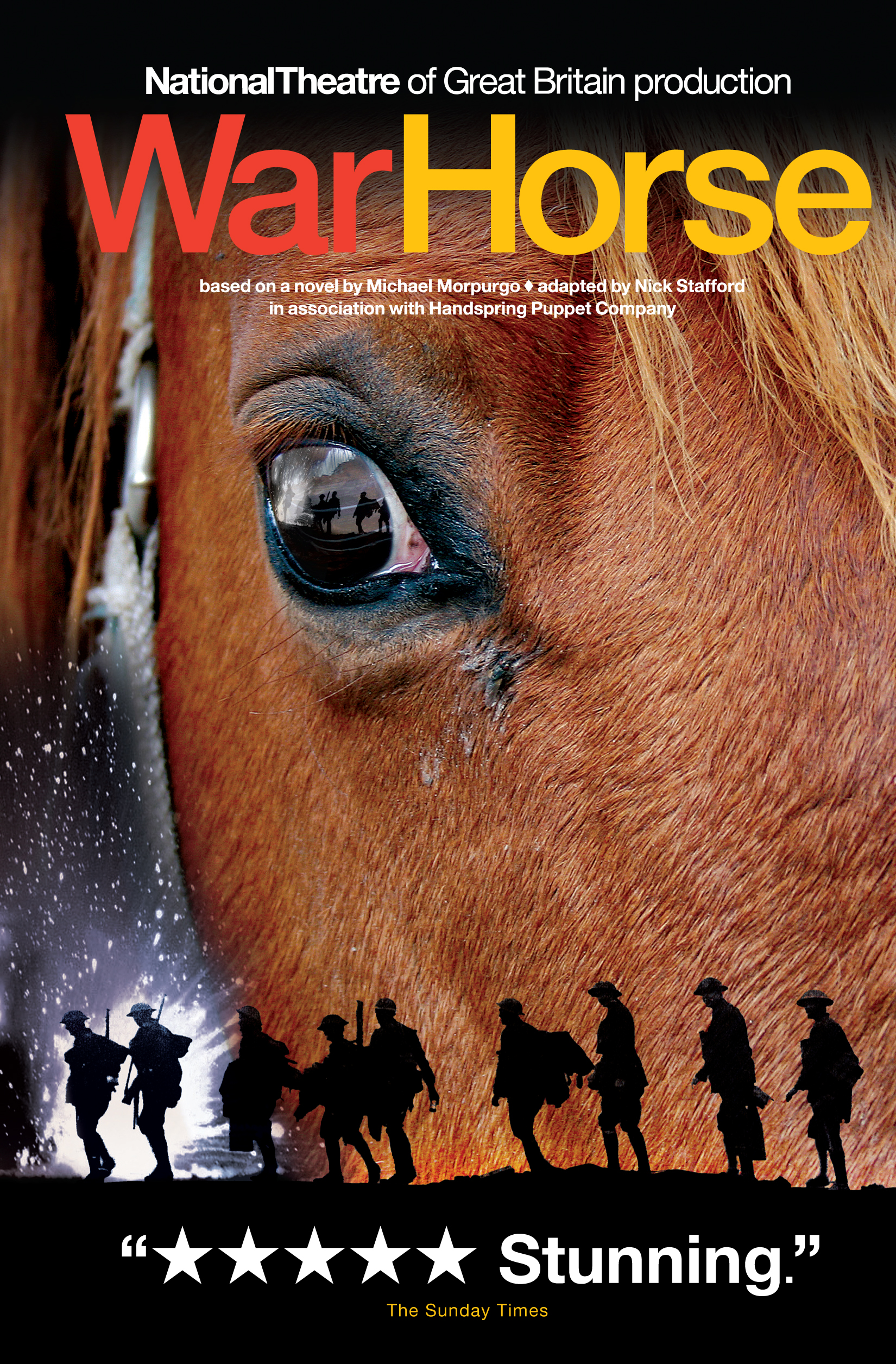
READING RESPONSE: WAR HORSE BY MICHAEL MORPURGO

Currently, I am reading War Horse by Michael Morpurgo. This book is about a young boy named Albert going through World War One with his horse as his only friend. One day Albert's father sells his horse, Joey, to serve in the army cavalry. Albert is devastated and once he comes of age, he joins the army to find Joey. Through battles and bombings he searches for Joey, until eventually he finds him.

I predict that Albert and Joey will have major difficulties while looking for each other, since World War One is raging all around them. Albert will probably have to decide which he prefers more: his life, or his horse. Albert is a courageous young boy, and his very determined;he must be if he is willing to enter a war zone for his horse.

Michael Morpurgo is an astonishingly good author. He has such a great fluency and voice in his writing. The book is a magical story from the beginning to the end.

In conclusion, I think the book is a wonderful piece of writing and is definitely one of the best I've read.

Wednesday, January 22, 2014


READING RESPONSE: INSURGENT BY VERONICA ROTH

After finishing Veronica Roth's first book, Divergent, I began to read her second book, Insurgent. In the end of Divergent, the main character Beatrice Prior became involved in a war between the factions Dauntless, Erudite, and her former faction, Abnegation. The faction full of people desperately seeking knowledge is Erudite. Erudite developed a potion that controlled all the minds of the Dauntless, and forced them to kill innocent Abnegation, who where withholding information from the Erudite. Since Beatrice is divergent, she is immune to the potion, and she starts out on an adventure to the Erudite headquarters, in order to stop all this madness. So far I am up to a very action filled part where the other factions (such as Amity and Candor), who weren't originally involved in the war join Beatrice In her attempt to conquer the Erudite.

It is amazing how much Beatrice has matured throughout both books. In the first book, she was a shy girl from Abnegation, and now she is at the head of an extremely violent war for information. She has truly become Dauntless. When she first transferred factions, anything slightly risky terrified her, but now she willingly jumps off moving trains, or shoots a gun. I'm not sure if this change is for the better, but it certainly makes her more useful during wartime.

I predict that Beatrice will be successful in breaching the Erudite headquarters, but judging from Veronica Roth's style of writing, she will completely flip the outcome, such as the leader of Erudite knew they were coming and set up a trap.

I'm very disappointed because the author hasn't written the third book in this series yet, so when I finish this book, I will have to wait until the next one is published. The author, Veronica Roth has a very unique style of writing. She uses flashbacks from a lot of different characters, and allows the reader to enter each characters mind.


This book is amazing, it might even be better than the first book. I highly recommend it.

Wednesday, January 15, 2014

READING RESPONSE: DIVERGENT BY VERONICA ROTH 

I wanted to read a different type of book this week, something more futuristic and exciting, and I came across Divergent by Veronica Roth. This book is set in the future in Chicago, when society has been completely changed. Now, when a child turns 16, they have to make a choice of a faction. There are five factions, and the one they choose is where they will stay for the rest of their lives. These five factions are Dauntless, Abnegation, Erudite, Amity, and Candor. Each one stands for a different personality. For example, Dauntless is for someone who is brave, and Abnegation are for the selfless people. The main character, Beatrice Prior chooses Dauntless, and has to go through the tough Dauntless initiation ceremony. The book is about how she struggles to truly become Dauntless and how she faces the strange rules of her society.

Although I am nearly finished, I predict that Beatrice will accomplish Dauntless initiation, but will soon be faced with even more challenges. Since she is extremely courageous, I believe that she can get past any problem that is thrown her way. 

In the beginning of the book, Beatrice was a shy girl from Abnegation. She followed all the rules and never took any risks. By the time she turned 16 and transferred to Dauntless, she has become a completely new person. Being in Dauntless means you have to face your fears, and she did so and although she did not become fearless, she became an experienced young woman. She learned to have more freedom and to stand up for herself, qualities that are not usually supported in Abnegation.

The Author, Veronica  Roth, is an extremely talented writer. She expresses the main character's inner feelings in a very interesting way, by allowing the reader to see all of Beatrice's thoughts, and how she struggles to make decisions. She also uses flashbacks, and shows Beatrice's previous life in Abnegation.

This book is amazing, and I can't wait to finish it so I can read the second one.

Wednesday, December 18, 2013


READING RESPONSE: RUNNING ON THE CRACKS BY JULIA DONALDSON

I have finished 'Life of Pi' by Yaan Martel, and I have begun 'Running on the Cracks' by Julia Donaldson, and it appeared very interesting. In the first few chapters I've read, I can gather that the main character is called Leo, and she has run away from her family. I'm still not sure why she ran away, but I assume I will learn soon. Finlay, a paper boy, comes across Leo when reading a section in the news labeled 'Missing Persons', and is determined to help her. At first, Leo was wary of him, and what his true intentions were, but now she trusts him. Finlay and Leo have already gone on many adventures, trying to avoid the police looking for Leo.

The inquiry question I chose for this book is 'Whose perspective is missing in this text? What would it be like if we put it back?' This book is mainly the perspective of the main character, Leo, although some chapters feature her sexually abusive uncle. The perspective missing is that of Leo's cousins, who bullied her, which is also another reason of why she ran away. I think it would be interesting to include these opinions, as it would show their reactions and whether or not they show remorse for driving Leo away.

I predict that Leo will be caught by the police or someone aware that she is a runaway. She has already had many close encounters and had to hide out at Finlay's house for a couple days. Leo probably won't last much longer without someone noticing her. I wonder how her family will react.

The author, Julia Donaldson, is a particularly interesting writer. This is her first young adult book, as she used to write children's books. Her most popular books are 'The Gruffalo' and 'The Gruffalo's child'. She also writes the book in different perspectives, such as the protagonist Leo, her sidekick Finlay,one of Finlay's relatives, Kim, and Leo's uncle.

So far, this book has been an amazing read, considering it is her first young adult book. I highly recommend it.

Wednesday, December 11, 2013

READING RESPONSE: LIFE OF PI BY YANN MARTEL

I am reading a very interesting book called the Life of Pi by Yann Martel. Although I am barely five chapters into the story, I can already see the book's potential. Using my knowledge so far I know that the book is told from the perspective of an Indian man looking back and reflecting on his past, starting from when he graduated college. This man is called Piscine Molitor Patel and he is narrating the story and informing the reader about his life when he was younger. 

Piscine, the main character, is a very clever (he graduated with double majors in religion and zoology) and thoughtful person. I predict that Piscine will tell us about his earlier years and will lead up to his great past adventure. I can relate to Piscine, and his yearn to reveal his past and the good times he had. I sometimes have the similar feeling of wanting to dive into the depths of my fondest memories of the past, and to embrace and reflect on them.

The social issue question I chose for this book was 'how does this text address the points of view (perspective) of other groups, especially those who usually don't get to tell their side?' This book largely focuses on the perspectives of the animals that Piscine is trapped on the boat with. Although the animals don't physically speak, the author focuses on their actions to show how they feel.
 
The author, Yann Martel, is an extremely descriptive writer. He makes the vibrant colors and feelings of the character's past come to life and explode in a shower of remarkable writing.He manages to somehow grasp the exact description of each moment and make it seem s real. I love reading his work because it makes me feel as if I am actually in the moment, and experiencing all the same feelings and thoughts as the main character.

I think Yann Martel wants us to comprehend our pasts and wonder about our futures, just like Piscine.  I think about the interesting way the author sets up the book, starting from the past and leading up to the future, but in the end, I actually makes the book more enjoyable. 

Wednesday, December 4, 2013


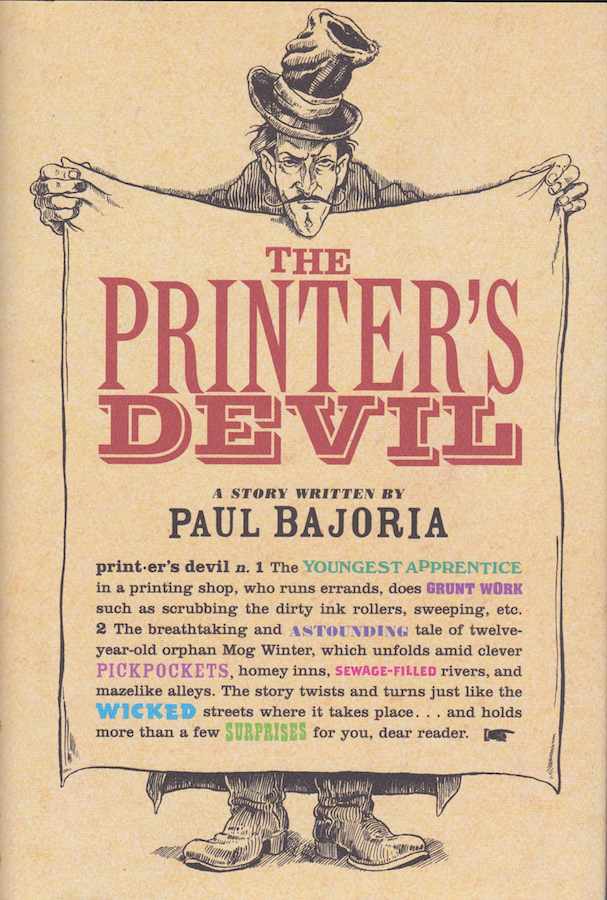
READING RESPONSE: THE PRINTER'S DEVIL BY PAUL BAJORIA

Currently, I am reading Paul Bajoria's "The Printer's Devil". This story takes place in Victorian England with a young orphan boy named Mog Winters. He embarks on a mystery involved with a ship's cargo, a murderer, and all the criminals in London. An important part in the book is when the main character Mog, discovers thieves stealing treasure and pursues them, only for them to kidnap him, which puts him on the trail of the mystery. This shows that Mog is an adventurous, curious, and daring character.

I admire his impulsiveness and how he relies on his instincts.I predict that with his now extensive knowledge of the mystery, he will be faced with many tricky and dangerous situations, and will meet another character to aid him on his mission. I can relate to Mog and his constant yearn for adventure. 

He also reminds me of another character, in the book "The Ruby in the Smoke" by Phillip Pullman. This book also takes place in victorian England, but with a spunky female lead who gets caught up in a mystery as well. 

Paul Bajoria uses many adjectives and descriptive actions in his book, which allows the story to become more exciting and suspenseful. I believe the author wants the readers to think about the experiences and joys of childhood, just like what Mog is going through in the story.

I often ask myself questions about Mog's recklessness and why he listens to his heart and not to his mind, but in the end I realize it is because he is still young and is trying to live his life to it's full potential. Throughout the story, after going through countless dangers, Mog becomes older and wiser, and his wisdom often comes from past experiences. This book is very touching but still tough and action filled, and I am enjoying it very much.

Wednesday, November 20, 2013


Cut and paste advertisements from a newspaper or magazine that make you react in a way that questions their motivation. Write about what you believe advertisers are trying to get you to think about.


“Peta”, a group working towards the ethical treatment of animals, presented this advertisement on multiple billboards. Normally, I agree with Peta’s arguments, as I am almost fully vegetarian myself, but when I saw this advertisement, I was shocked. I believe this advertisement was aimed to encourage people to become vegetarian by including a picture of a slightly chubby woman, as if to say that meat makes you gain large amounts of weight. Meat does in fact add to your weight, but only when multiple portions are consumed over a long period of time. This advertisement was urging women to become vegetarian to lose weight, which is a horrible incentive that will just make women feel more insecure about their bodies.

Monday, November 11, 2013


Should Young Adult Books be Banned from 6th Grade Libraries?

By Isobel Weiner 813


Dear Ms.Berner,

The banning of young adult books has become a very controversial topic. While some people involved in the literary world argue that certain books are just too dark for young readers, others protest against banning, saying it limits children from gaining knowledge and relating to the book. Young adult books should not be banned from 6th grade libraries because it would hinder readers from being educated or advancing, as well as holding them back from a whole new world which could help them deal with problems in their own lives.

Banning young adult books would hold back some 6th graders from advancing their reading skills. For example, banning books such as “The Perks of Being a Wallflower” by Stephen Chbosky would limit their knowledge on the subjects of depression, peer pressure, and sexual abuse. Chbosky’s book allows the reader to dive deep into the story of Charlie, the protagonist, who struggles through school socially and academically, while attempting to fit in as well. Reading books such as this that are above the average reading level would help the 6th graders to comprehend and understand more, making them more advanced readers over all.

Another example of why banning books in 6th grade libraries would be a bad choice is because it could take away the potential for a child to relate to the book. Sherman Alexie, the author of the novel “The Absolutely True Diary of a Part-Time Indian” discusses in his article “Why the Best Kids Books Are Written in Blood” how reading young adult fiction at a young age helped him “battle the real monsters” in his life. If a 6th grader is having problems at home, or is depressed, or anything of the sort, reading books with characters facing the same difficulties can help them. As Sherman Alexie writes in the last paragraph of his article, “And now I write books for teenagers because I vividly remember what it felt like to be a teen facing everyday and epic dangers. I don’t write to protect them. It’s far too late for that. I write to give them weapons – in the form of words and ideas – that will help them fight their monsters. I write in blood because I remember what it felt like to bleed.” Some teenagers relate so deeply to young adult books that they completely immerse themselves in the story, self-identify with the characters, and have their personality changed as a result of how meaningful the story was to them. This new study of how teenagers are affected by young adult books is discussed in the article “Reading Fiction ‘improves empathy’, study finds, US researchers measure impact of reading JK Rowling and Stephenie Meyer” by Alison Flood. The article states how researchers from the University of Buffalo gave students chapters from either 'Twilight' or 'Harry Potter and the Philosopher's Stone' to read. As written in paragraph two, "The candidates then went through a series of tests, in which they categorized "me" words (myself, mine) and "wizard" words (wand, broomstick, spells, potions) by pressing one key when they appeared on the screen, and "not me" words (they, theirs) and "vampire" words (blood, undead, fangs, bitten) by pressing another key." The result of the study was that people who read the Twilight passage self-identified as vampires, while people who read the Harry Potter passage self-identified as wizards. According to the article, "belonging to these fictional communities" can help improve the reader's mood and personality. This research shows how young adult fiction can deeply connect with the reader, and even positively affect their mood, both of which would be highly beneficial for 6th graders at Ms.51.   

Some people argue that young adult works are too lurid and dark for young readers, including Meghan Cox Gurdon, the author of the article “Darkness Too Visible”. Gurdon remarks in her article how teens will find themselves “surrounded by images not of joy or beauty, but of damage, brutality, and losses of the most horrendous kinds.” This statement can be completely refuted. While certain young adult books include dark aspects, over all they have a moral or a resolution, or even just an ending note that will educate the reader. Young adult is a very popular genre among teenagers, because the stories are moving and relatable, and they shouldn’t be banned just because specific parts contain questionable material.

In conclusion, young adult books should not be banned from 6th grade libraries because it would hold the students back from learning and expanding their knowledge, as well as robbing them of the opportunity to relate to the book, and use the moral of the story to help them face problems in their own lives.


Monday, October 14, 2013


Reading Response: The Perks of Being a Wallflower by Stephen Chobsky


   Recently, I read 'The Perks of Being a Wallflower' by Stephen Chobsky, and it was an amazing book. It is split into four parts of diary entries from Charlie, a freshman in high school. Charlie is a young boy who has some issues, which as the reader finds out later, come from being sexually abused by his aunt Helen when he was little. The story focuses on how Charlie survives high school, socially and academically. When he meets his two best friends, Sam and Patrick, his life is momentarily turned around. The nightmares he had from aunt Helen became less frequent, and he didn't feel as lonely. Charlie goes through many teenage experiences, ranging from drugs, alcohol, sex, and relationships, and often they cause him to forget about his depression.

   This book is a lot more than just young adult fiction, it has a very captivating quality to it that will attract many readers. The moral of the story is to keep living your life, to not let depression or unhappiness get in your way, and I think that is a great moral which applies to people of all ages. Even when Charlie figured out that his aunt had touched him, he continued through high school and didn't let his troubling past hinder him.

   In the book, Charlie is treated unfairly, especially by his parents and peers. Whenever he tries to express himself it is frowned upon, and even though his parents love him, they often become frustrated over the amount of nightmares he has about Aunt Helen. He begins to drink and experiment with drugs to make friends, and that takes him down the wrong path, as he loses his friends because he was awful to his girlfriend. The issues of peer pressure, drugs, unhappiness, and alcohol are present in the book, and peer pressure especially affects Charlie because he is so desperate to have a good high school experience with friends.

   In conclusion, I loved this book, it was a memorable read and in the end, I felt like I had learned an important lesson. Stephen Chobsky is an extremely talented author. The diary entries he wrote made it seem like he was actually a fourteen year old boy, which helped me visualize the story much better. This book was incredible and I highly recommend it.

Monday, September 30, 2013


 READING RESPONSE: MY SISTER LIVES ON THE MANTELPIECE BY ANNABEL PITCHER

   I recently started reading a terrific yet saddening new book titled My Sister Lives on the Mantelpiece by Annabel Pitcher. This book is written from the perspective of a young boy, whose sister was killed in a terrorist attack. The boy has to deal with his family being torn apart over the loss. He struggles to understand what has happened to his life; his mother has left, his father became an alcoholic, and his other sister is in deep depression.

   James, the young boy, has been raised by his father to hate muslims (it was a muslim who committed the terrorist attack that killed his sister),but eventually he overcomes this absurd obstacle and rather guiltily, becomes friends with a muslim girl. I predict that James' father will find out about his newfound friendship and will be extremely furious with him. James will probably not listen to his father's tormenting words and will remain friends with the muslim girl,Sunya. I can relate to James, and his confusion of the loss of loved one, sometimes I, like James, like to feign ignorance and pretend that the loved one is still with me. 

   Some issues in the book include death, alcohol, cheating, and lying. The issue of death is treated as a sacred topic in the story, for example, the father still acts as if Rose is alive, and enforces a rule that no one says the word 'dead' in the house. The issue of cheating is kept almost like a secret. Jamie's other sister, Jas, never talks about the fact that their mother abandoned them because of an affair, and the father drinks in order to avoid the subject.


   The author of this book, Annabel Pitcher, is a wonderful writer. She choses to present her work in such an artistic way, with multiple flashbacks and descriptive moments. These tools definitely make the story more enjoyable. I think the author wants us to consider what death can truly do to someone, and how it can destroy someone's whole life. She wants us not to just think about the subject of death, but of the experience of knowing someone who went through it. I often wonder why she chose to write the book through the eyes of a small boy. But now I think it is because it emphasizes the pain and confusion the entire family must be feeling. This book is very emotional but enjoyable and I am eager to continue reading it.

Friday, September 27, 2013

Faithful Elephants Theme Essay

By Isobel Weiner 813
 
 
   The picture book 'Faithful Elephants: A True Story of Animals, People, and War' by Yukio Tsuchiya is a story about the suffering of the Ueno Zoo in Tokyo, Japan at the end of World War II. The story focuses on the tale of three Elephants, John, Tonky, and Wanly, who are sentenced to death by the Japanese Army for fear that bombs will drop and set them loose. The zookeepers murder the Elephants for the safety of the Japanese people, showing how sacrifice for the common good is a central theme of the passage.


   An example of how sacrifice plays an important role in the story can be found in paragraph six. "What would happen if bombs hit the zoo? If the cages were broken and dangerous animals escaped to run wild through the city, it would be terrible!" The zookeepers sacrificed all the lions, tigers, leopards, bears, big snakes, and eventually, the three elephants. By doing this, they protected the people from potential carnage that the bombs could cause.

  A second example of sacrifice being a central theme of the story is  in the seventh paragraph. The author describes how the zookeepers did everything in their power to make John's death quick and painless, which is a true example of love and sacrifice. "John loved potatoes, so the elephant keepers mixed poisoned potatoes with the good ones when it was time to feed him". When that didn't work, the keepers tried to inject poison into his body. That method didn't work either, so eventually they were forced to starve him, even though it clearly pained them to see the elephants die in such a cruel way.

   A final example of how the theme of sacrifice is included in the book is from the quote "The zookeepers wanted so much to keep Tonky and Wanly alive that they thought of sending them to the zoo in Sendai, far north of Tokyo. But what if bombs fell on Sendai? What if the elephants got loose and ran wild there? What would happen then?" Sacrifice means giving up something you love for the benefit of others or for the greater good. This quote shows how much the zookeepers adore Tonky and Wanly, but deep inside they know that killing them is the best option for the Japanese people, so they sacrifice their beloved elephants.

   In conclusion, a main idea of 'Faithful Elephants' is sacrifice, shown through the decision to kill the elephants for the Japanese people, the attempted painless deaths, and the way the zookeepers frantically searched for another option besides murder. Tsuchiya wants the reader to understand how war can affect everyone and make them do things they never imagined themselves doing, like sacrificing something they love.

Sunday, September 15, 2013

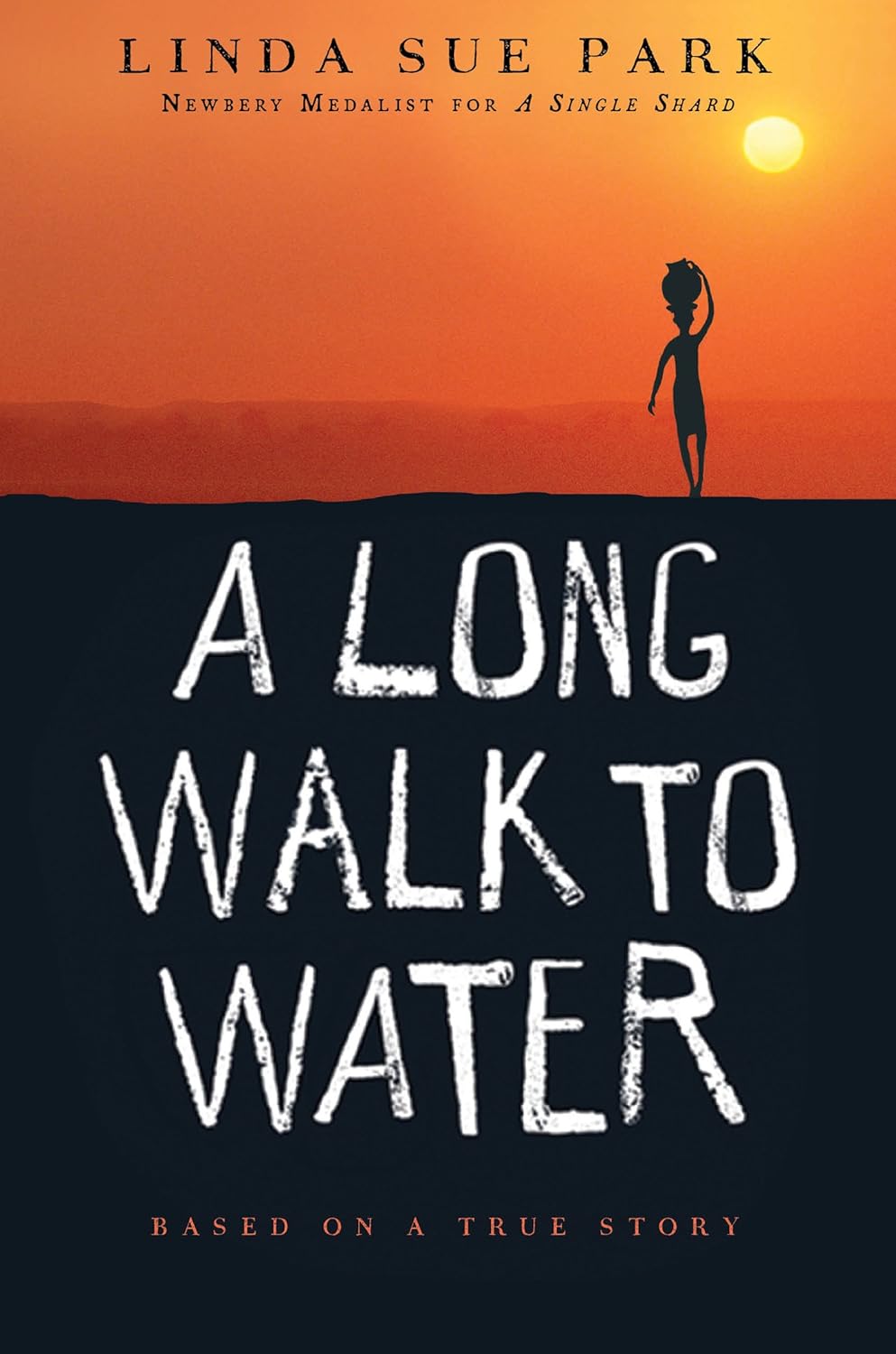
READING RESPONSE: A LONG WALK TO WATER BY LINDA SUE PARK

   Over the summer, I read a book called 'A Long Walk to Water' by Linda Sue Park. The book was told in two perspectives, one of a girl named Nya, and the other of a boy named Salva. The story starts with Salva, an 11 year old boy living in Sudan in 1985. One day when Salva is in school, an explosion from the ongoing war is heard and he runs away, only to be separated from his entire family. Salva continues walking towards a perceived safe camp in Ethiopia, sometimes in groups and sometimes alone, struggling to survive the harsh desert weather and constant hunger for a morsel of food. Eventually Salva and his companions reach the refugee camp, only to be forced out in 1991 and having to cross dangerous rapids full of crocodiles, where thousands are killed. Being one of the lucky people who survived the river, Salva takes it upon himself to lead the 1,200 orphaned boys to another refugee camp in Kenya.

   Nya is a young girl living in Sudan in 2008. Her whole life revolves around water and having to fight the constant battle of survival. Each day Nya must embark on an eight hour walk to the pond to gather water for her and her family. In the Dry season, Nya's family moves to an area with a dry lake bed, in which they must dig through mud and dirt until water trickles in.

  After Salva spent many years in the refugee camp he is chosen to go live in Rochester, NY with his new family. Salva adjusts to a new life and even learns English, and soon he develops the idea of building wells in Sudan for all those who struggle to find drinkable water. When Salva travels back to Sudan, he is reunited with his family, and he begins drilling wells throughout Sudan. Here he meets Nya as he is drilling a well in her town and building a school for both Sudanese boys and girls, allowing Nya to go to school for the first time ever.

  In conclusion, I greatly enjoyed the book and it was very moving how Nya and Salva's stories combined in the end. Linda Sue Park is a highly talented and descriptive author, and I highly recommend this book.

Sunday, June 16, 2013

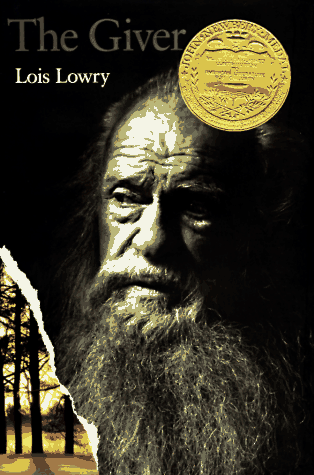
READING RESPONSE: THE GIVER BY LOIS LOWRY

My group has finished 'The Giver' by Lois Lowry, and it was an excellent book. It is about a boy named Jonas who lives in a perfect world where everything is the same. No one has a distinctive personality, people are given children by applying for them, and most importantly, no one can make their own decisions as everything is chosen for them by the committee of elders. Children go through stages in this prefect world, from year one, where they are named, to year twelve, where they are given an assignment. Jonas is the eldest child in his family unit of four. He is 12 and is about to be given a job in the ceremony of 12. Surprisingly, he is given the most prestigious yet dangerous job of receiver of memory. He is trained by a man named the giver who holds all the memories of the past, which he must transfer onto Jonas. Jonas goes through the adventure of receiving these memories. From simple memories about riding a sled, to traumatizing memories of hunger in Africa. The memories change him and the way he sees the world completely. He becomes wise and knowledgeable, just like the giver. Jonas soon comes to realize that it is unfair for the people of the community to be deprived of memories and making choices. He decides that the community must change. With the help of the giver, Jonas chooses to leave the community and go to elsewhere, a place beyond the community where rebellious citizens had been banished. When Jonas leaves all his memories will be let loose and the citizens will become aware of what they had been missing. Jonas departs on the long and difficult journey, facing some of the memories the giver had told him about. Eventually he reaches Elsewhere, and his mission to change his community is successful.

My earlier prediction, that Jonas would become close with the giver came true. Although some of the memories were harsh and depressing, it only made Jonas connect with the giver on a deeper level. This book was amazing, and I highly recommend it.


Saturday, June 8, 2013

READING RESPONSE: THE GIVER BY LOIS LOWRY

I have started to read 'The Giver' by Lois Lowry with my book club. The book focuses on the challenges faced by the protagonist, Jonas. Jonas is a twelve year old boy who lives in a perfect world where everyone's life is planned out for them. When Jonas undergoes the ceremony of twelve, which is when each child is assigned a role in the community, he is singled out to train with the receiver of memory, who he later calls the giver. The giver holds in his mind all the memories from the past, which he will give to Jonas, as he is becoming too old.

I predict that Jonas will develop a close relationship with the Giver, because judging by their first meeting, the giver is very keen to tell Jonas the truth about the past. As his first lesson, he gave Jonas the memory of snow, and Jonas decided to trust and respect the giver. I think this trust will increase with each meeting.

The author, Louis Lowry, is very talented. She writes very descriptive flashbacks to the past, such as when the giver is transmitting his memories to Jonas. I am highly enjoying this book, and I can't wait to see what happens next.